
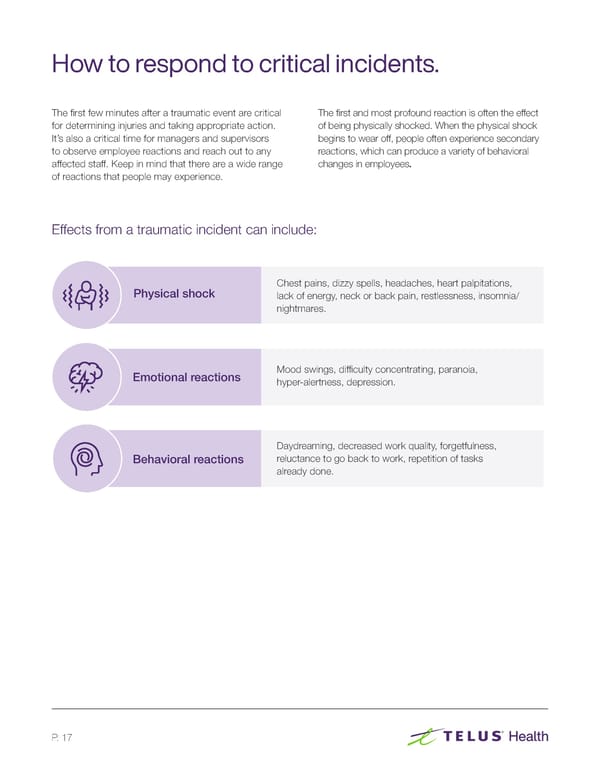
P. 17 How to respond to critical incidents. The first few minutes after a traumatic event are critical for determining injuries and taking appropriate action. It’s also a critical time for managers and supervisors to observe employee reactions and reach out to any affected staff. Keep in mind that there are a wide range of reactions that people may experience. The first and most profound reaction is often the effect of being physically shocked. When the physical shock begins to wear off, people often experience secondary reactions, which can produce a variety of behavioral changes in employees. Effects from a traumatic incident can include: Physical shock Emotional reactions Behavioral reactions Chest pains, dizzy spells, headaches, heart palpitations, lack of energy, neck or back pain, restlessness, insomnia/ nightmares. Mood swings, difficulty concentrating, paranoia, hyper-alertness, depression. Daydreaming, decreased work quality, forgetfulness, reluctance to go back to work, repetition of tasks already done.
 The Employee Assistance Program (EAP) Resource Guide Page 16 Page 18