
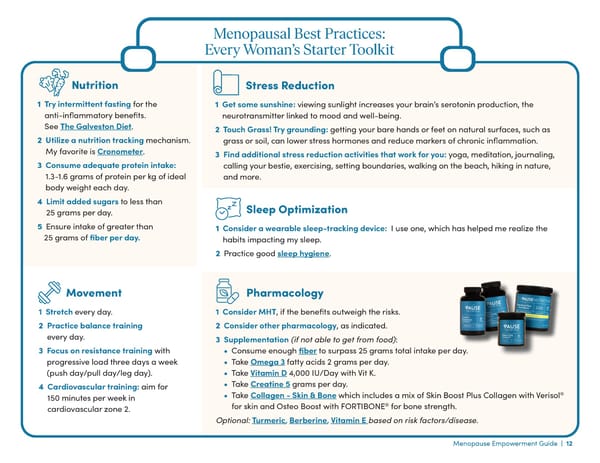
Menopause Empowerment Guide | 12 Menopausal Best Practices: Every Woman’s Starter Toolkit Nutrition 1 Try intermittent fasting for the anti-inflammatory benefits. See The Galveston Diet. 2 Utilize a nutrition tracking mechanism. My favorite is Cronometer. 3 Consume adequate protein intake: 1.3-1.6 grams of protein per kg of ideal body weight each day. 4 Limit added sugars to less than 25 grams per day. 5 Ensure intake of greater than 25 grams of fiber per day. Movement 1 Stretch every day. 2 Practice balance training every day. 3 Focus on resistance training with progressive load three days a week (push day/pull day/leg day). 4 Cardiovascular training: aim for 150 minutes per week in cardiovascular zone 2. Stress Reduction 1 Get some sunshine: viewing sunlight increases your brain’s serotonin production, the neurotransmitter linked to mood and well-being. 2 Touch Grass! Try grounding: getting your bare hands or feet on natural surfaces, such as grass or soil, can lower stress hormones and reduce markers of chronic inflammation. 3 Find additional stress reduction activities that work for you: yoga, meditation, journaling, calling your bestie, exercising, setting boundaries, walking on the beach, hiking in nature, and more. Sleep Optimization 1 Consider a wearable sleep-tracking device: I use one, which has helped me realize the habits impacting my sleep. 2 Practice good sleep hygiene. Pharmacology 1 Consider MHT, if the benefits outweigh the risks. 2 Consider other pharmacology, as indicated. 3 Supplementation (if not able to get from food): • Consume enough fiber to surpass 25 grams total intake per day. • Take Omega 3 fatty acids 2 grams per day. • Take Vitamin D 4,000 IU/Day with Vit K. • Take Creatine 5 grams per day. • Take Collagen - Skin & Bone which includes a mix of Skin Boost Plus Collagen with Verisol® for skin and Osteo Boost with FORTIBONE® for bone strength. Optional: Turmeric, Berberine, Vitamin E based on risk factors/disease.
 The Menopause Empowerment Guide Page 11 Page 13