
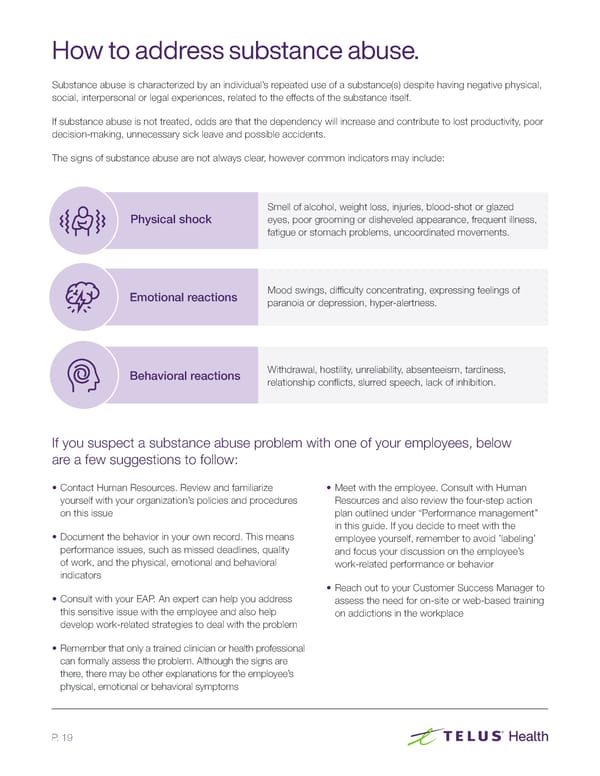
P. 19 Physical shock Emotional reactions Behavioral reactions How to address substance abuse. Substance abuse is characterized by an individual’s repeated use of a substance(s) despite having negative physical, social, interpersonal or legal experiences, related to the effects of the substance itself. If substance abuse is not treated, odds are that the dependency will increase and contribute to lost productivity, poor decision-making, unnecessary sick leave and possible accidents. • Contact Human Resources. Review and familiarize yourself with your organization’s policies and procedures on this issue • Document the behavior in your own record. This means performance issues, such as missed deadlines, quality of work, and the physical, emotional and behavioral indicators • Consult with your EAP. An expert can help you address this sensitive issue with the employee and also help develop work-related strategies to deal with the problem • Remember that only a trained clinician or health professional can formally assess the problem. Although the signs are there, there may be other explanations for the employee’s physical, emotional or behavioral symptoms Smell of alcohol, weight loss, injuries, blood-shot or glazed eyes, poor grooming or disheveled appearance, frequent illness, fatigue or stomach problems, uncoordinated movements. Mood swings, difficulty concentrating, expressing feelings of paranoia or depression, hyper-alertness. Withdrawal, hostility, unreliability, absenteeism, tardiness, relationship conflicts, slurred speech, lack of inhibition. If you suspect a substance abuse problem with one of your employees, below are a few suggestions to follow: The signs of substance abuse are not always clear, however common indicators may include: • Meet with the employee. Consult with Human Resources and also review the four-step action plan outlined under “Performance management” in this guide. If you decide to meet with the employee yourself, remember to avoid ’labeling’ and focus your discussion on the employee’s work-related performance or behavior • Reach out to your Customer Success Manager to assess the need for on-site or web-based training on addictions in the workplace
 The Employee Assistance Program (EAP) Resource Guide Page 18 Page 20